Release Notes 2026
Frequently Asked Questions!
How do I see descriptions of codes in enquiry screens?
How do I access field level help?
How can I delete a payment run
How do I stop over receipting of orders
Why has my transaction not appeared on the payment run?
How do I stop a user posting to a prior and future period
How to copy and delete lines during data entry?
Prevent user posting to specific balance classes
Download Templates
User setup requires multiple screens and is complicated!
Changing security access to a user
Out of office
How do I give a user read only access?
De-allocate and an AP Payment
Can I run a report to view security groups against my users?
Hints and Tips!
Useful information to include when raising Financials cases
Navigation Hints and Tips
Browse Timeouts
Accounts Payable Quick Cards
Accounts Payable Supplier File
Accounts Payable Data Entry
Log Invoice/Credit Note
Enter a logged Invoice
Non Purchase Order Related Invoice Entry
Order Related Invoice
Order Related Invoice with Mismatches
Order Related Invoices - mismatch scenarios
Mismatch Types
Invoice and Credit Note Matching
Accounts Payable Enquiries
Accounts Payable Payments
Payment Processing
AP Payment Cancellation
Create a manual payment
Re-run Bacs Remittance
Cancel a full BACS payment.
Payment Processing Audits
Single Supplier Payment Processing
Transaction Maintenance
CIS Processing
Accounts Payable Code Tables
Accounts Receivable Quick Cards
Customer Maintenance
Data Entry and DDI Mandates
Enquiries
Cash Allocation
Credit Control
Student Sponsor
General Ledger Quick Cards
Chart of Accounts Setup
Create a new nominal code
Create management and analysis codes
Creating and Amending Nominal and Management code relationships
Create a new GL Structure Element
General Ledger Data Entry
Journal Entry
Journal Upload
General Ledger Journal Multi Level Authorisation
Modernisation Budget Upload
General Ledger Enquiries
Account Details
Trial Balance
GL Enquiries - Balance Sheet & Profit and Loss
Enquire across multiple years
Transactions Enquiries
Period and Year End Close
General Ledger Security
General Ledger Tax Journals
Fixed Assets Quick Cards
Prompt File - Asset Creation Updated
Fixed Assets Period End & Depreciation Updated
Revaluation
Disposals
Relife
Purchasing Management Quick Cards
Inventory Management Quick Cards
Return to Store
Stock Taking
Create Demand on Store (Financials)
Bin Transfers
Stock Disposal
Stock Adjustments
Import Tool Kit
Reconciliation Processes - Helpful how-to guides
Daily Checks
General Ledger Reconciliation Reporting
Accounts Payable Reconciliation Reporting
Accounts Receivable Reconciliation Reporting
Fixed Assets Reconciliation Reporting
Purchasing Management Reconciliation Reporting
Procurement Portal
Procurement Portal Overview
Navigation
Requisitions
Orders
Authorisation
Receiver
Invoice Clearance
Portal Administration
Procurement Portal – Teams Setup
Invoice Manager
Bank Reconciliation
Bank Reconciliation Overview
Bank Reconciliation Menus Explained
Bank Reconciliation Company Controls
Bank Reconciliation Code Tables
Transaction Types and Sub Types
Bank Reconciliation Enquiries
Bank Reconciliation Reports
Manual Bank Reconciliation
Bank Reconciliation Take-on
Unmatching Transactions
Reporting
General Ledger Reports
Account Payable Reports
Fixed Assets Reports
Sales Invoicing Reports
Accounts Receivable Reports
Bank Reconciliation Reports
Purchase Invoice Automation (PIA)
February Release
March Release
January 2026
Deleting Supplier training data
Resetting password - Smart Workflow
Purchase Invoice Automation (PIA)
Adding a New User - Smart Workflow
Password Reset in Smart-Capture
How to Create a New User in Smart-Capture
Reprocessing Failed OCR Supplier Invoices
Smart Capture Email Configuration Overview
Configuring Smart Capture to use Gmail in the Web UI
MAP Configuration Non-Microsoft and Non-Google Accounts
Configuring Smart Capture to use Microsoft 365 (Graph API) in the Web UI
Suggested Testing Areas
Release Notes - New UI Improvements
June Release 2024 - New UI Improvements
May Release 2024 - New UI Improvements
April Release 2024 - New UI Improvements
Release Notes 2025
December 2025
November 2025
October 2025
September 2025
August 2025
July Release
June Release
May 2025
April 2025
March 2025
February 2025
January 2025
Release Notes 2024
December 2024
November 2024
October 2024
September 2024
August 2024
July 2024
June 2024 Release
May 2024 Functional Changes
Financials Design Improvements
User Interface Overview
Chart Functionality
User Preference Improvements
Alerts & Field Error Focus
The all new Data Grid!
Input Fields & Dynamic Validation
Screen Structure
Miscellaneous New Features
Generic Actions
Bring Your Own BI (BYOBI)
Collaborative Planning
Financial Reporting Consolidation
Flow Headstart Forms
Request a Customer
Request a Supplier
Request a Sales Invoice
Request a Management Code
Request a nominal code
Create a Pay Request
API
Air Approvals
Contents
- All categories
- Procurement Portal
- Authorisation
Authorisation
 Updated
by Caroline Buckland
Updated
by Caroline Buckland
Authoriser
Authorising an order
Once logged in, if your ‘Authorisation’ workbench isn’t displaying, select the ‘Authorisations’ menu.
This screen will give you some basic information. It will show the date of the oldest order that is awaiting authorisation and the number of days old. It will also show the date of the newest order. A total value field indicating the value of all orders that are awaiting your authorisation will displayed at the end.
To Authorise the document, use the Actions icon.
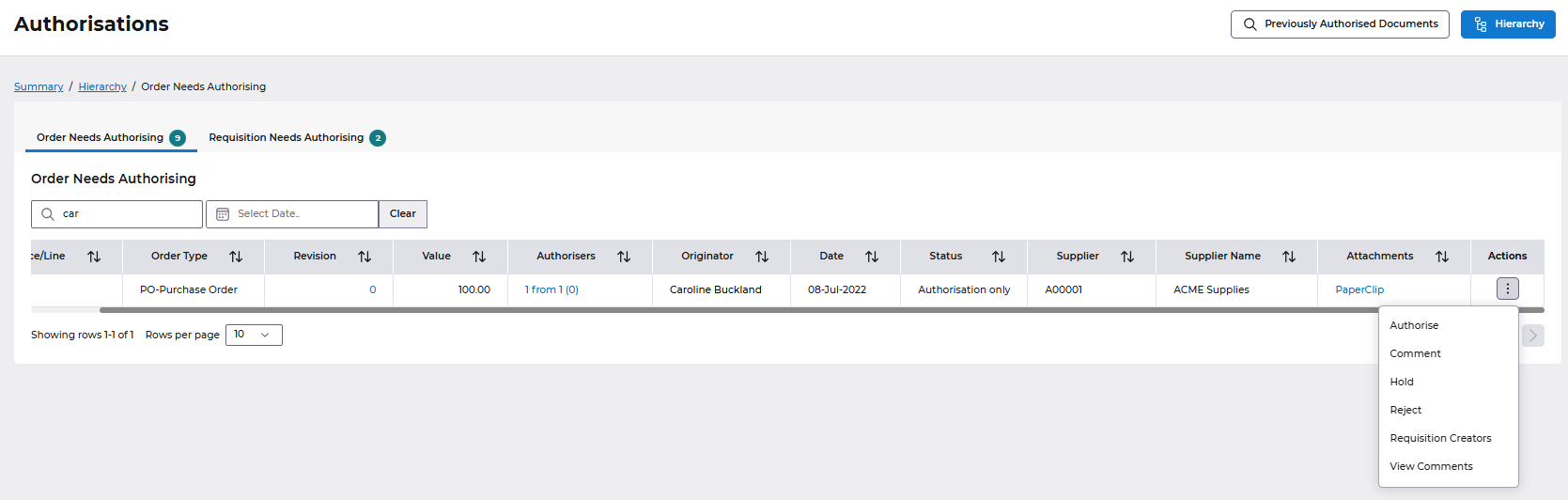
The individual orders or requisitions will then be displayed.
This screen will also show who created the order the value and the date.
Depending on the value of the order will depend on how many authorisers will be needed before the document will be released to the supplier.
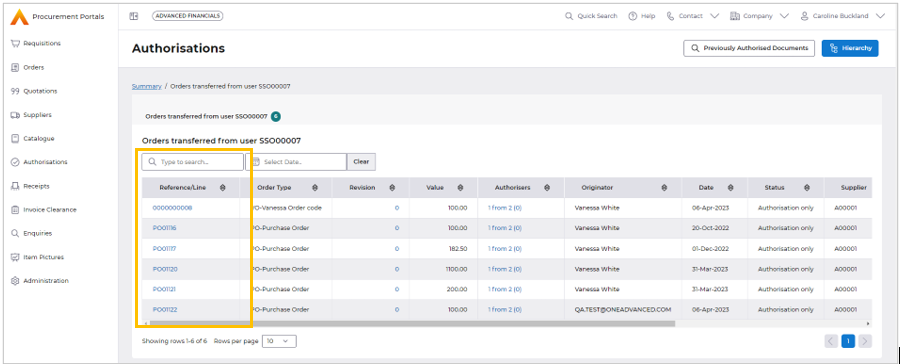
If you wish to view the line details of the document, select the Order Reference which is under the ‘Reference/Line’.
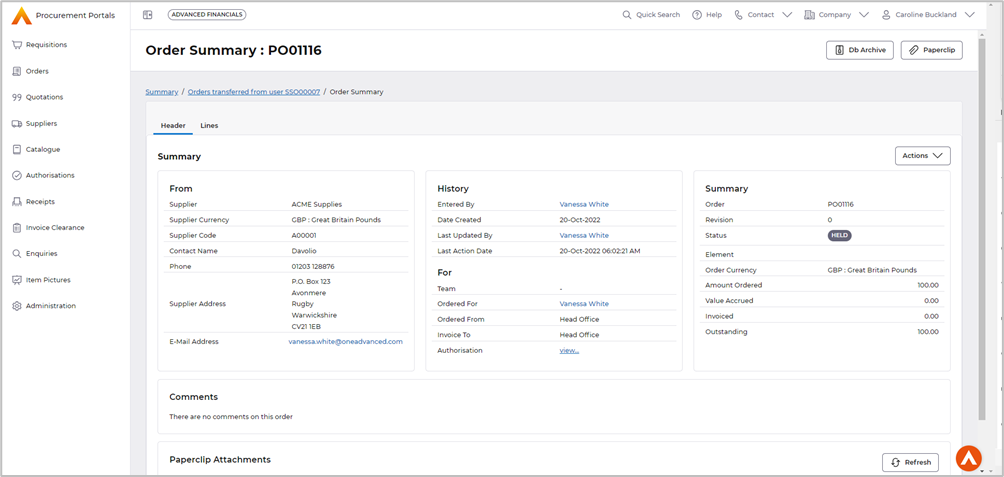
The top part of the screen will show the order summary, supplier, values and creator details.
Select the Display Revisions tab. This will only be available if revisions have been made to the order.
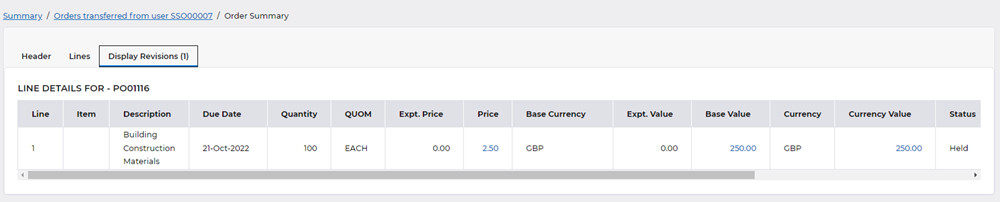
Any field with a hyperlink can be selected, this will display the before and after details.

Use the Close button to get back to the summary.
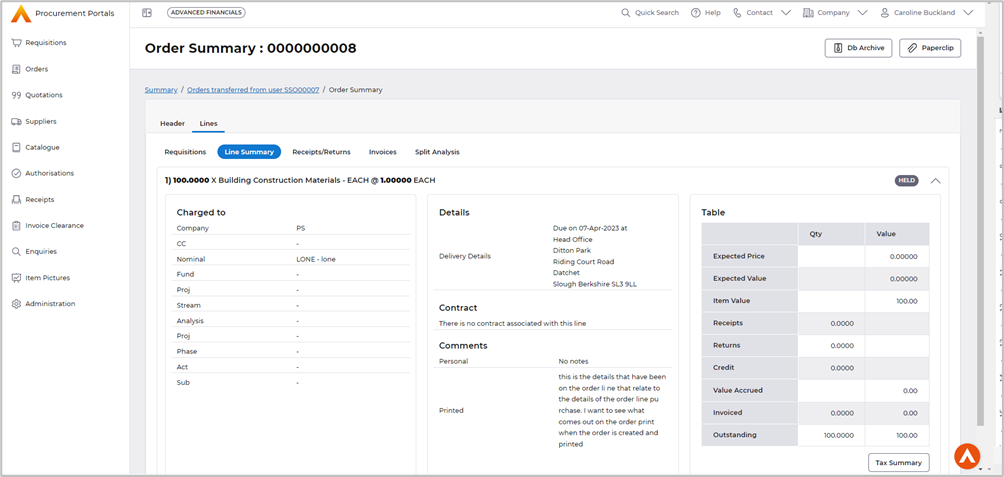
Use the Lines tab to view line details.
The second tab will show Item description, quantity, price and the status. Use the scroll bar to the right-hand side if more lines exist.
Return back to the Header tab.
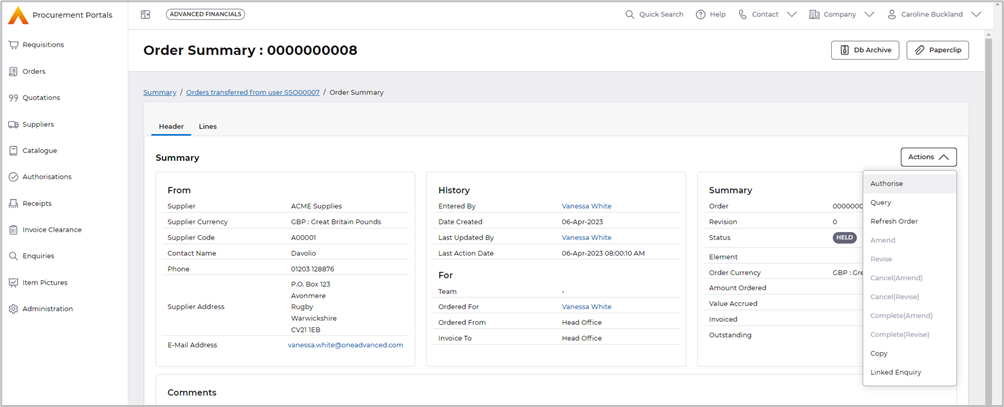
You can now decide what action you require to take against the order by expanding the ‘Actions’ pulldown menu against the Order.
You can authorise from this screen by selecting ‘Authorise’.
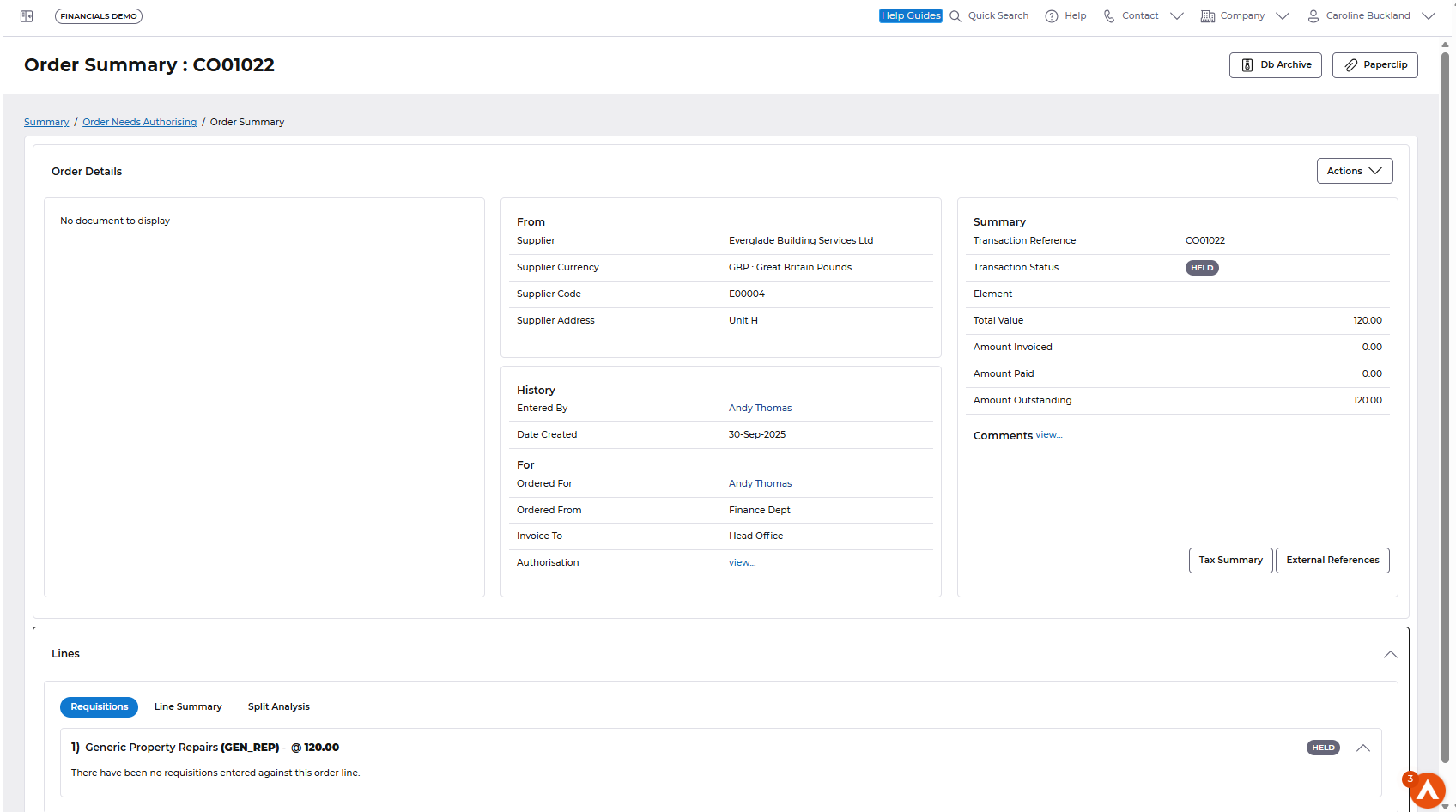
A message will be displayed to indicate the order has been authorised.

The Order will be authorised in the background.
Authorise from the Workbench
You can authorise straight from Workbench.
Select the Authorisation menu and click on the Select button to retrieve a list.
The following screen will be displayed, use the ‘Actions’ drop menu to view the available options.
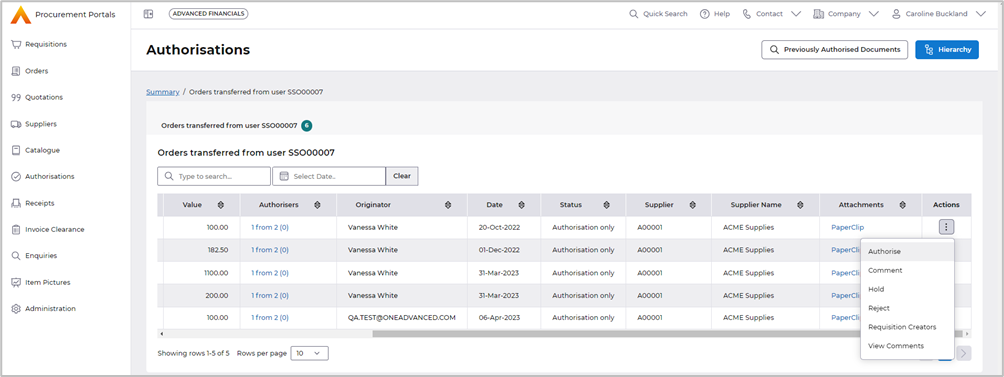
If you wish to add comments first, select the ‘Comment’ option.

The following screen will be displayed, you can then enter any relevant comments.
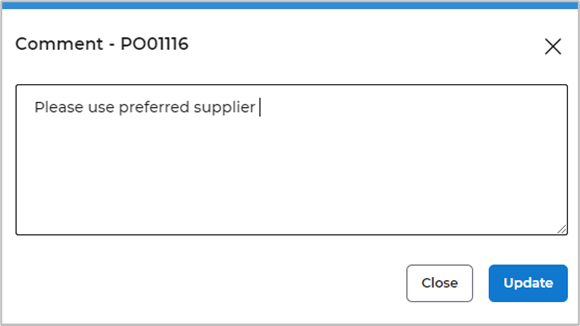
Once complete. ‘Update’
You will receive a message to say your comments have been updated.

The Order Owner will then be able to view this comment and process the document as required.
To Authorise the order; select the ‘Authorise’ option from the ‘Action’ pull down menu.

You will be taken to a summary screen to check the details.
If the order has paperclip attachments, they can be viewed from this screen.
Select the link in ‘Paperclip Attachments’ area to open the document.
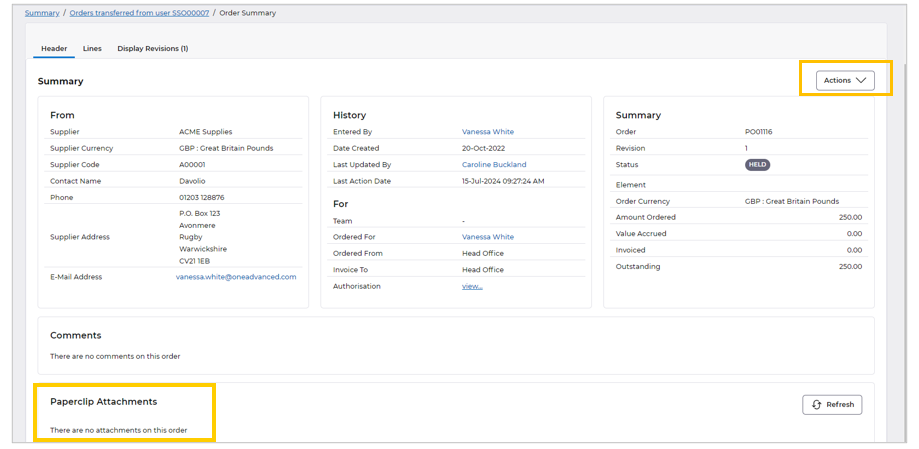
From the ‘Actions’ drop down, use the ‘Authorise’ button.
The order will also be taken off your list.
Funds checking on an Order
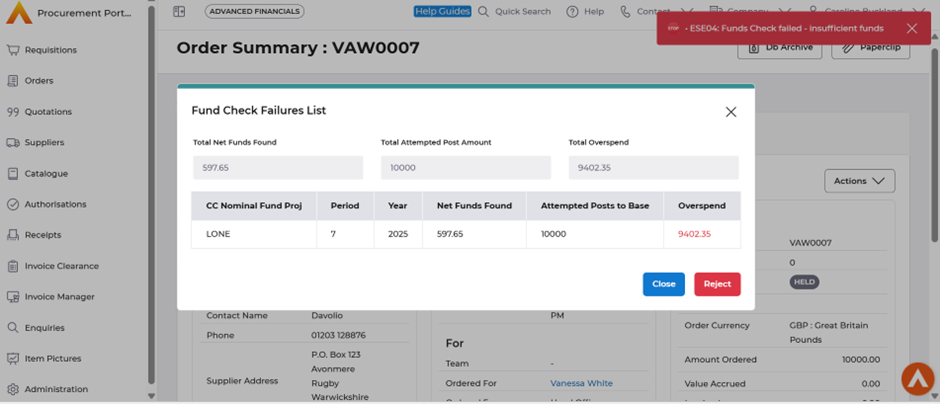
if your organisation if using funds checking and the order fails the funds check, the following will be displayed.
When accessing the Authorisations option, select the Authorise action against an order.
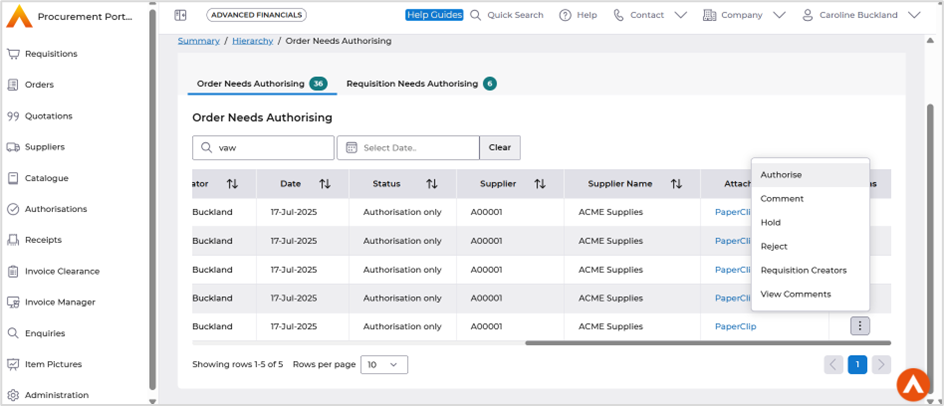
Depending on your settings, will depend on when the message appears, this could be after the selection of Authorise.
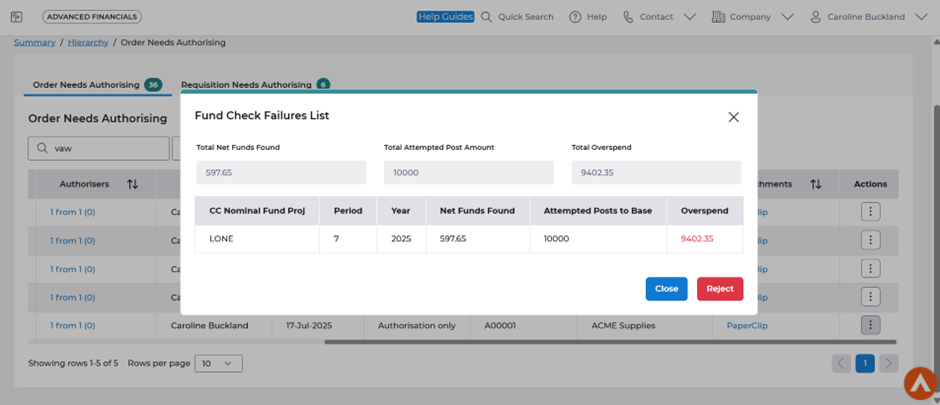
Or, It will be on the order summary screen after selecting Authorise again to confirm the authorisation.
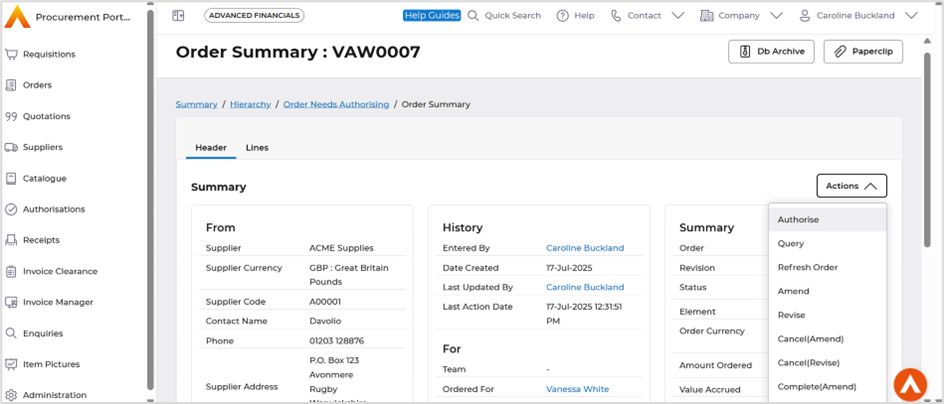
Select Close, accept the funds check failure or select Reject to reject the order.
Selecting Reject will pop up a comments box. Enter any valid comments, followed by Update.
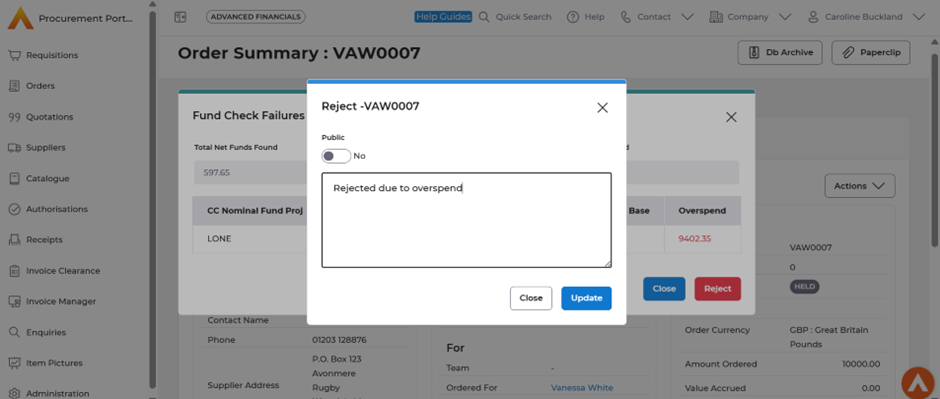
The order can be found in the Orders Workbench on the Rejected tile. The user can then either amend or cancel the order.
Reject an order
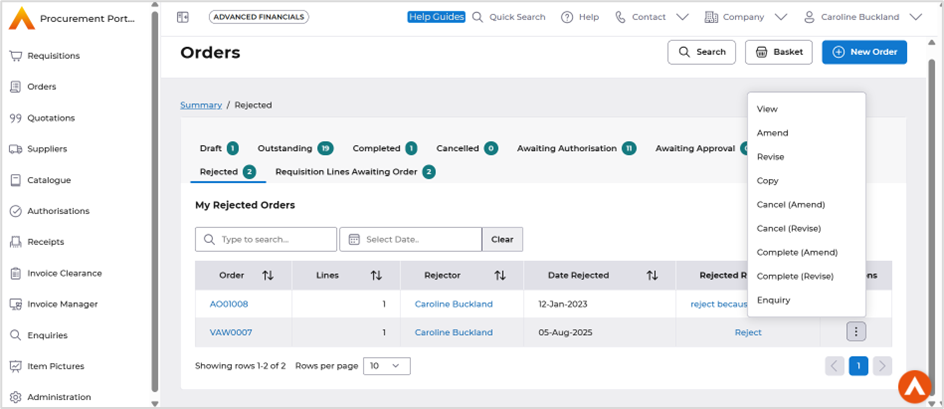
Access the Authorisation Workbench by selecting the Authorisations menu option.

Use the ‘Actions’ button, this will display all the orders awaiting your Authorisation.
Select the ‘Reject’ option from the ‘Actions’ pull down menu.
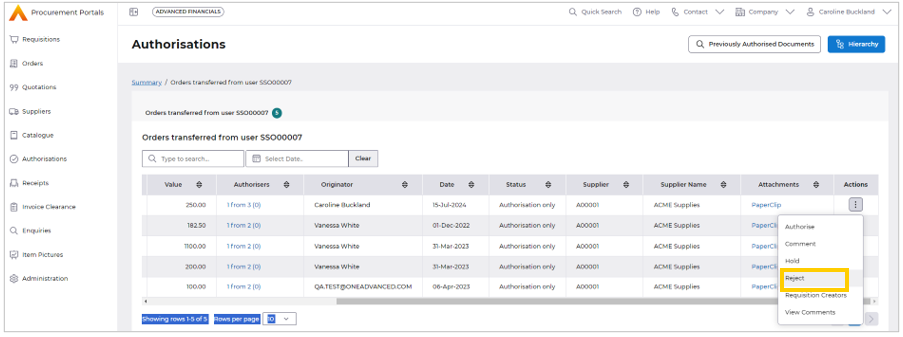
You will be asked to enter comments on why you have rejected the order from Authorisation. You can also flag whether these comments can be viewed by all users and not just the creator of the order by flagging the ‘Is Public’ box
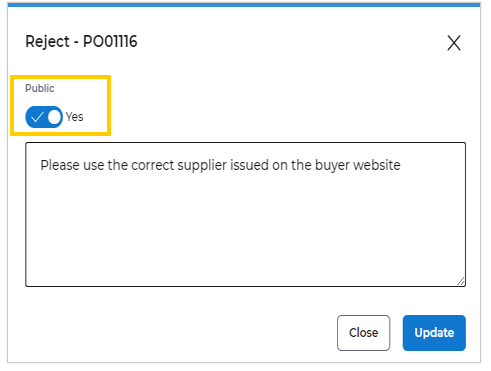
Once complete use the ‘Update’ button.
The order will then be sent back to the creator to make any changes required and the order will also be taken off your workbench, a message will be displayed to indicate this.

The comments can be viewed from the orders workbench by selecting the Rejected Orders tile.
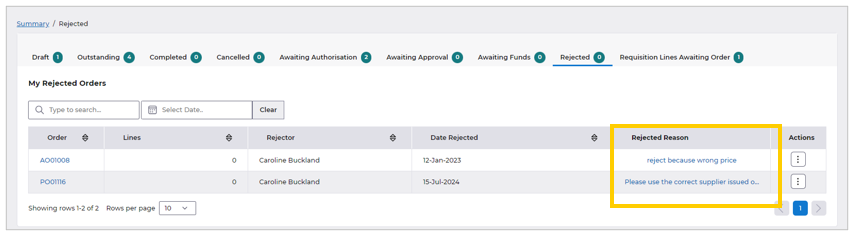
If you used the Authorise button first, then the Reject action is available from the summary screen.
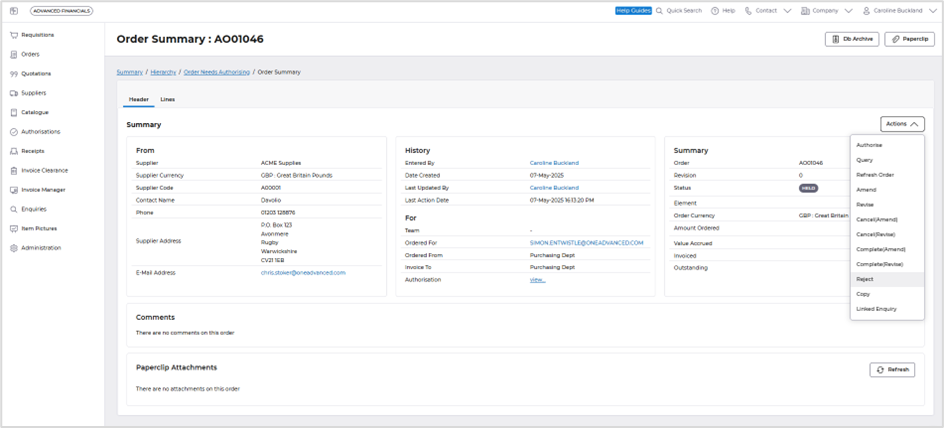
Put and order on hold
Select the ‘Hold’ option from the ‘Actions’ pull down menu.
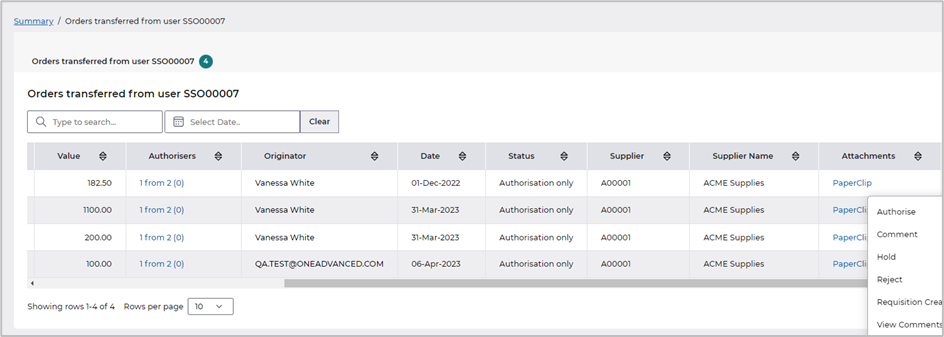
You will be presented with the following window. Enter your comments on why you have put the order on hold and then select the ‘Update’ button.
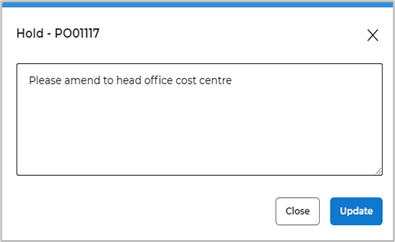
The status of the order will now be ‘Held’ – this order will never be sent to the Supplier unless it is released and then authorised.
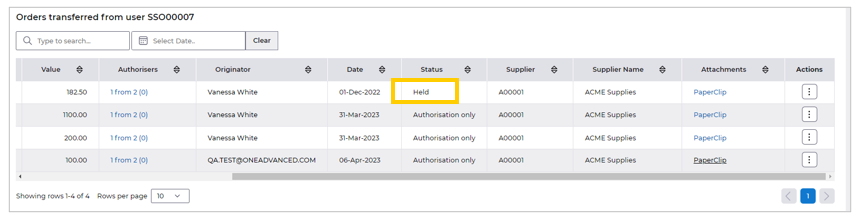
A message indicates the held action has been performed.
Release an order that is held
If you wish to Release the order for Authorisation or to Reject, then select the ‘Release’ Actions from the pulldown menu.
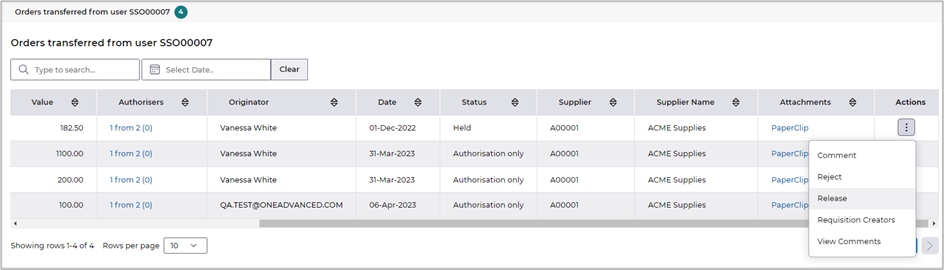
The comments box will then be displayed.
If you wish to add a comment on why you are releasing the order, then use the ‘Update’ Action.
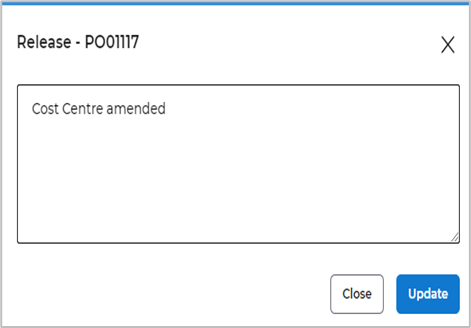
The order will then be awaiting authorisation.
Previously authorised documents
To view documents previously authorised, select the ‘Previously Authorised Documents’ button.

The search form is displayed, the current date will default you can make an entry in any of the fields to limit your search or leave blank to search for all.
Use the ‘Search’ button.
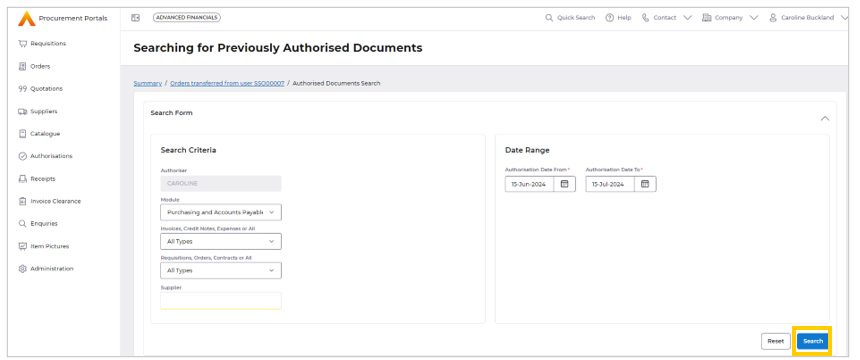
The previously authorised documents will be displayed.
Selecting the ‘Order Reference’ will show the order summary screen.
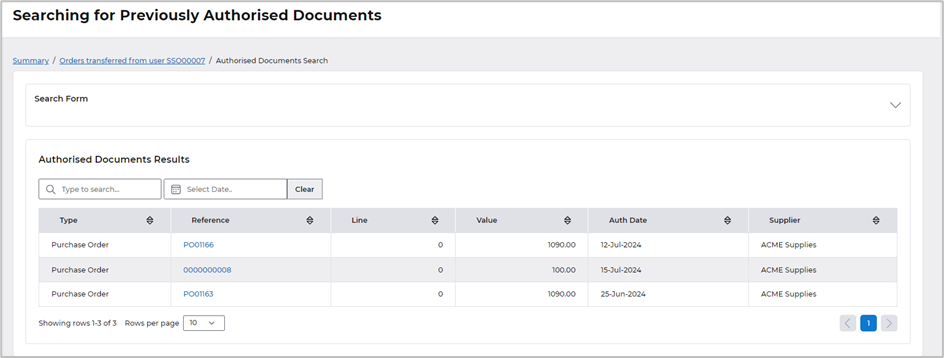
Authorise on behalf of others
If proxy authorisation is available within your organisation, this option will allow you authorise their documents.
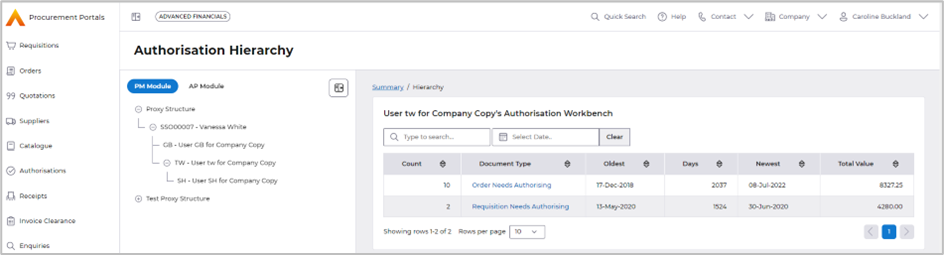
Select the ‘Hierarchy’ button.

You can then drill through the structure to locate the authorisers you have been setup to authorise on behalf of.
Breaking down the hierarchy will display the users.
Select a user and the workbench for that user is displayed, the orders can be authorised in the usual way.
Logoff
To logoff from the portals, select your name and ‘Logout’.